Climate change and the rapid rise in average annual temperatures in Ukraine have led to a significant expansion of the range and increased damage caused by many insects.
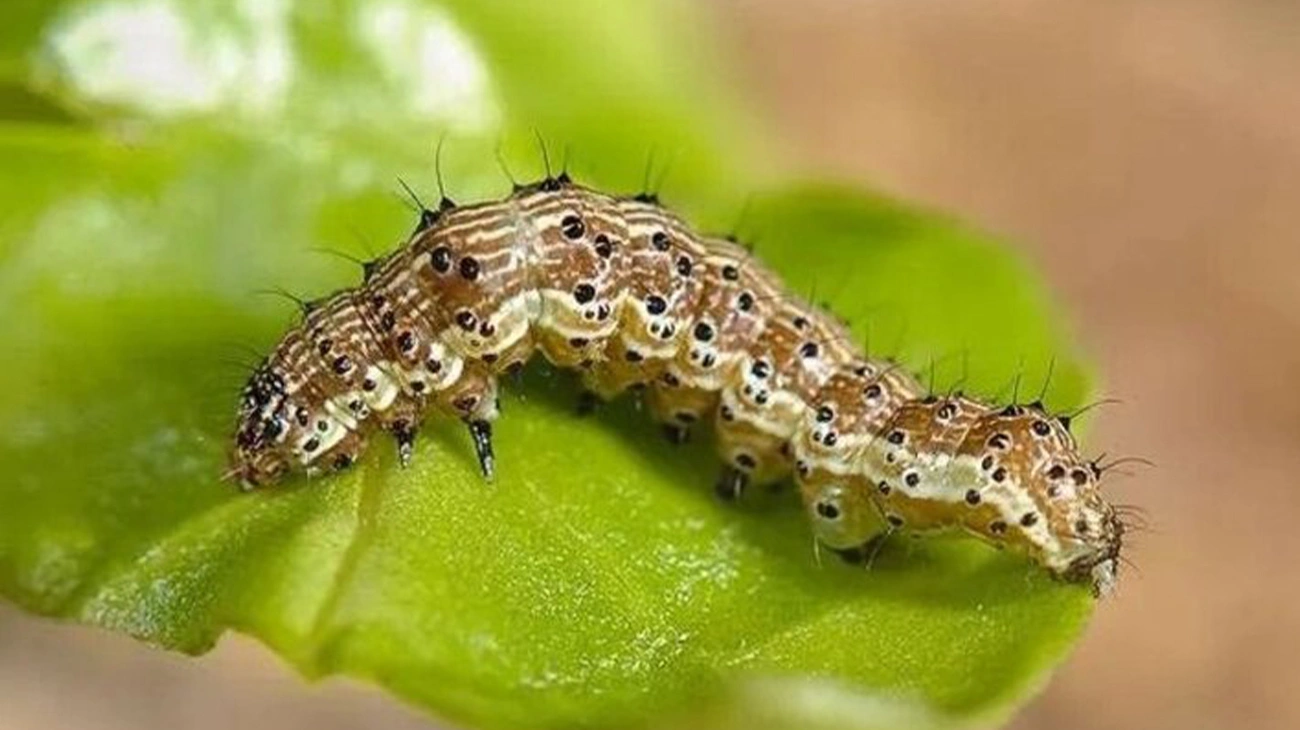
The cotton bollworm (Helicoverpa armigera Hb., family Noctuidae) is a dangerous member of the order Lepidoptera, which is rapidly expanding its range in Ukraine. Whereas previously this pest caused damage mainly in the central and southern regions, today, due to climate change, it is actively migrating northwards. This pest is a true polyphagous species: it infests sunflowers, maize, soya, chickpeas, vegetables (tomatoes, peppers, cabbage), melons and even fruit trees on a massive scale. In the absence of cultivated plants, the cotton leafworm adapts easily, feeding voraciously on common weeds such as common ragwort, datura, henbane and black nightshade.
Biological characteristics and life cycles of the pest
The cotton cutworm is a moth, but it is the caterpillars that pose the real threat. The pest produces 2–3 generations per season, depending on the region. First-generation moths appear in late spring, whilst the most numerous and damaging second and third generations occur in July and August. A single female can lay between 500 and 3,000 eggs, leading to explosive population growth under favourable (dry and hot) weather conditions.
Damage caused by the cotton bollworm to sunflowers
For sunflowers, the cotton bollworm is a hidden but extremely dangerous enemy. Younger-stage caterpillars initially feed on leaves and bracts, but they cause the most significant damage when they penetrate the sunflower head.
The caterpillars eat the stamens, the flowers and, subsequently, the young seeds themselves. In addition to the direct loss of seeds, mechanical damage to the flower head opens the way for pathogens to enter. In the damaged areas, grey, white and other types of flower head rot develop instantly when exposed to moisture. As a result, farmers lose not only the total weight of the harvest but also suffer a catastrophic decline in seed quality — oil content falls and the acid value rises.
Which other crops are at risk?
The cotton bollworm is a classic polyphagous pest. Its ‘menu’ includes over 120 plant species.
Maize and soya
On maize, the pest damages the tassel and then penetrates beneath the husk of the cob, feeding on the kernels during the milky and milky-waxy stages of ripeness. On soya, the caterpillars destroy the leaves and buds, and later feed on the seeds directly inside the pods.
Tomatoes and vegetable crops
In private gardens and vegetable farms, the cotton bollworm infests tomatoes, peppers and aubergines on a massive scale. The caterpillars burrow into the fruit, rendering them unfit for consumption and sale.
Effective methods of control and crop protection
Effective protection against the cotton cutworm requires a comprehensive approach:
- Deep autumn ploughing: destroys the pest’s pupae overwintering in the soil.
- Pheromone monitoring: the use of traps allows the start of the moths’ flight to be accurately determined and the treatment date to be planned in good time.
- Chemical and biological control: the application of insecticides during the mass emergence of caterpillars (before they have entered the flower head or boll). A combination of systemic insecticides targeting older-stage caterpillars and ovicidal insecticides that destroy egg clusters is effective.
The cotton bollworm poses a serious challenge to modern crop production. Only regular monitoring of fields, the correct choice of insecticides and preventive agronomic measures will make it possible to control this pest and maintain the high yield potential of sunflowers and other crops.