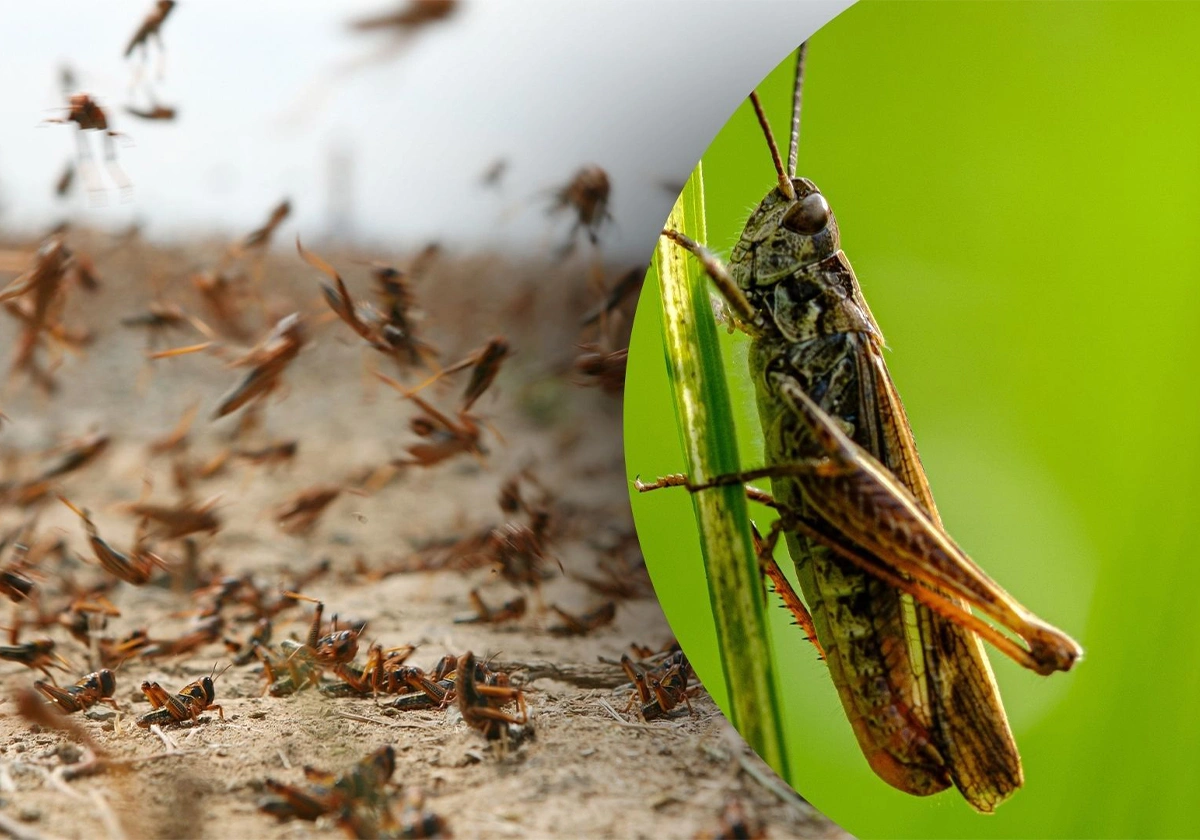
A new outbreak of migratory locusts has been recorded in the Kherson region, leading to the introduction of special plant protection measures in the region. The decision was taken following the detection of the dangerous pest in the Novovorontsov settlement community in the Beryslav district.
According to the State Service of Ukraine for Food Safety and Consumer Protection, the quarantine zone covers an area of approximately 155 hectares. In addition, a buffer zone has been established around the outbreak to contain the spread of locusts and protect agricultural land.
To contain the outbreak, landowners are treating the infested areas using authorised insecticides. These measures are aimed at preventing the mass reproduction of the pest and safeguarding the harvest.
Experts emphasise that locusts are one of the most dangerous pests affecting agricultural crops. Under favourable weather conditions, their numbers can grow rapidly, and large swarms are capable of causing significant damage to sunflower, maize, cereal and other crops.
In this regard, farmers are advised to regularly inspect fields, pastures, fallow land, roadsides and other areas where locust larvae may develop or adult locusts may congregate. If the pest is detected, it is essential to promptly notify the local branches of the State Service of Ukraine for Food Safety and Consumer Protection and to implement protective measures in accordance with current guidelines.
It should be recalled that at the end of June, a locust outbreak was also detected in the Dnipropetrovsk region. At that time, a quarantine regime was introduced in the Zelenodolsk urban community in the Kryvyi Rih district, where the quarantine zone covered an area of around 30 hectares.
This situation highlights the need for constant monitoring of crops in the southern regions of Ukraine, as the timely detection of locust outbreaks is key to effectively protecting the harvest and preventing the widespread spread of this dangerous pest.