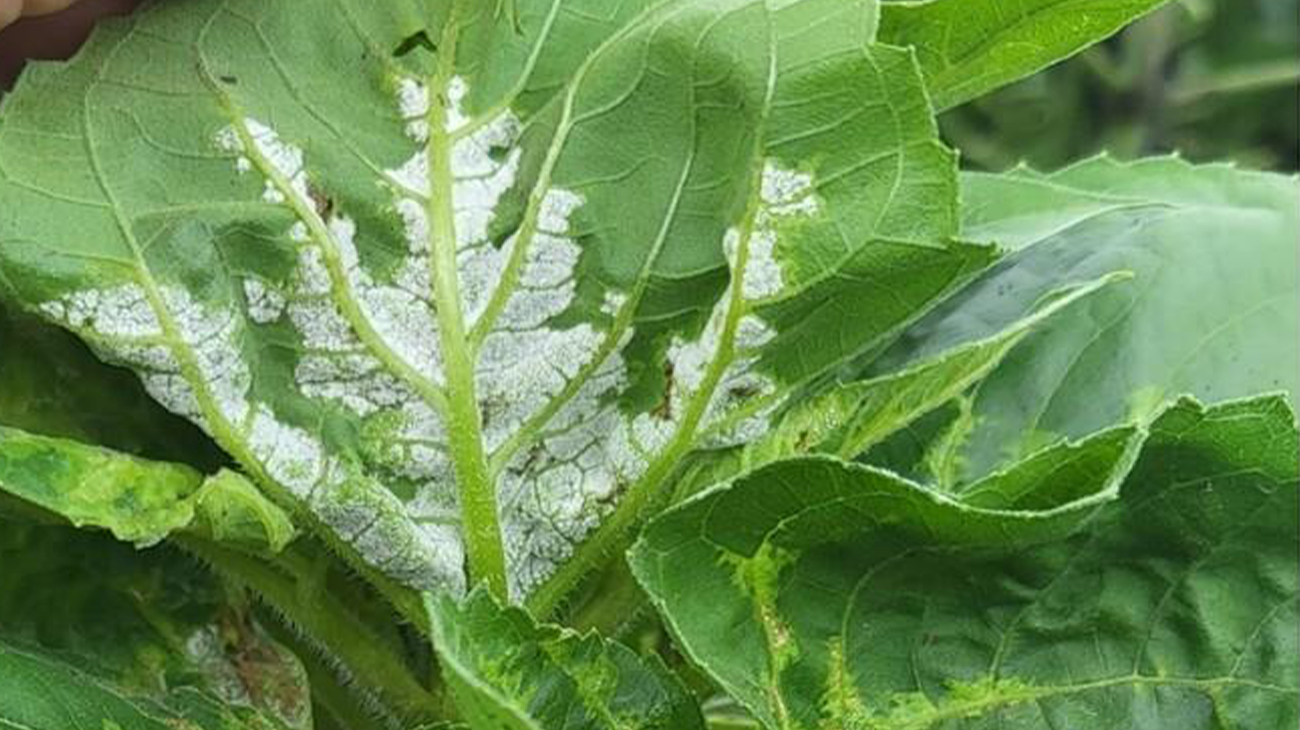
Sunflower is one of the most profitable and strategically important crops in Ukrainian agricultural production. However, high profitability requires farmers to pay the utmost attention to the health of their crops. One of the most dangerous infections, capable of significantly reducing yield potential and reducing the oil content of the seeds, is downy mildew (or false powdery mildew). Within a short period of time, this disease can lead to crop thinning and significant economic losses.
What is downy mildew: a description of the disease and symptoms of sunflower infection
Downy mildew is a common plant disease caused by a fungus-like organism of the genus Plasmopara. The insidious nature of the disease lies in the fact that it can infect plants at various stages of growth.
The main symptoms of downy mildew on sunflowers are:
- Stunted growth: Plants that have suffered diffuse infection in the early stages lag significantly behind in growth, have thickened stems and closely spaced internodes.
- Leaf chlorosis: Characteristic pale green or yellowish streaks appear on the upper surface of the leaves along the main veins.
- Spore production: In damp weather, a white or greyish dense coating forms on the underside of infected leaves.
- Underdeveloped flower heads: The inflorescences of affected plants often remain pointing upwards; they are small, and the seeds within them either fail to set at all (empty heads) or are underdeveloped.
Why downy mildew occurs: the main risk factors
- The pathogen persists for a long time in the soil and plant debris. The following factors actively contribute to the development and spread of the disease:
- Weather conditions: Cool and rainy weather after sowing, as well as in the second half of summer, creates an ideal environment for spore germination.
- Crop rotation issues: Shortening the rotation period for sunflowers in the crop rotation (to less than 8 years) leads to the accumulation of pathogens in the soil.
- Poor tillage: Failure to follow agronomic guidelines for soil tillage, which prevents plant residues from being incorporated deeply into the soil.
- Seed: Sowing untreated seed significantly increases the risk of seedling infection from the very first days of life.
Effective measures to protect sunflowers from downy mildew
Successful control of the disease is only possible through a combination of preventive and agronomic measures.
Agronomic methods and prevention
Proper agronomic practices form the basis of control. Reliable control measures include:
Growing genetically resistant sunflower varieties and hybrids.
Sowing only thoroughly cleaned, high-quality, sorted and treated seeds.
Strictly adhering to a crop rotation system for sunflowers, with the crop not returning to the same field for at least 8 years.
Maintaining spatial isolation between commercial and seed sunflower crops from the previous and current years, as well as regularly destroying volunteer plants, which act as a reservoir of infection.
Chemical control and fungicides for downy mildew
When preventive measures are insufficient and the disease begins to spread across the field, chemical control methods are used.
As regards chemical treatment, carbendazim-based products are effectively used during the crop’s growing season. The optimal dosage involves spraying at a rate of 1.5 l/ha. To achieve maximum effectiveness and prevent resistance to the active ingredient, the maximum permitted number of treatments is two per season.
Sunflower downy mildew is a serious threat that must not be ignored. Adhering to an 8-year crop rotation, using high-quality treated seeds of resistant hybrids, and the timely application of carbendazim-based fungicides will enable reliable control of the spread of downy mildew and help maintain high yield potential.