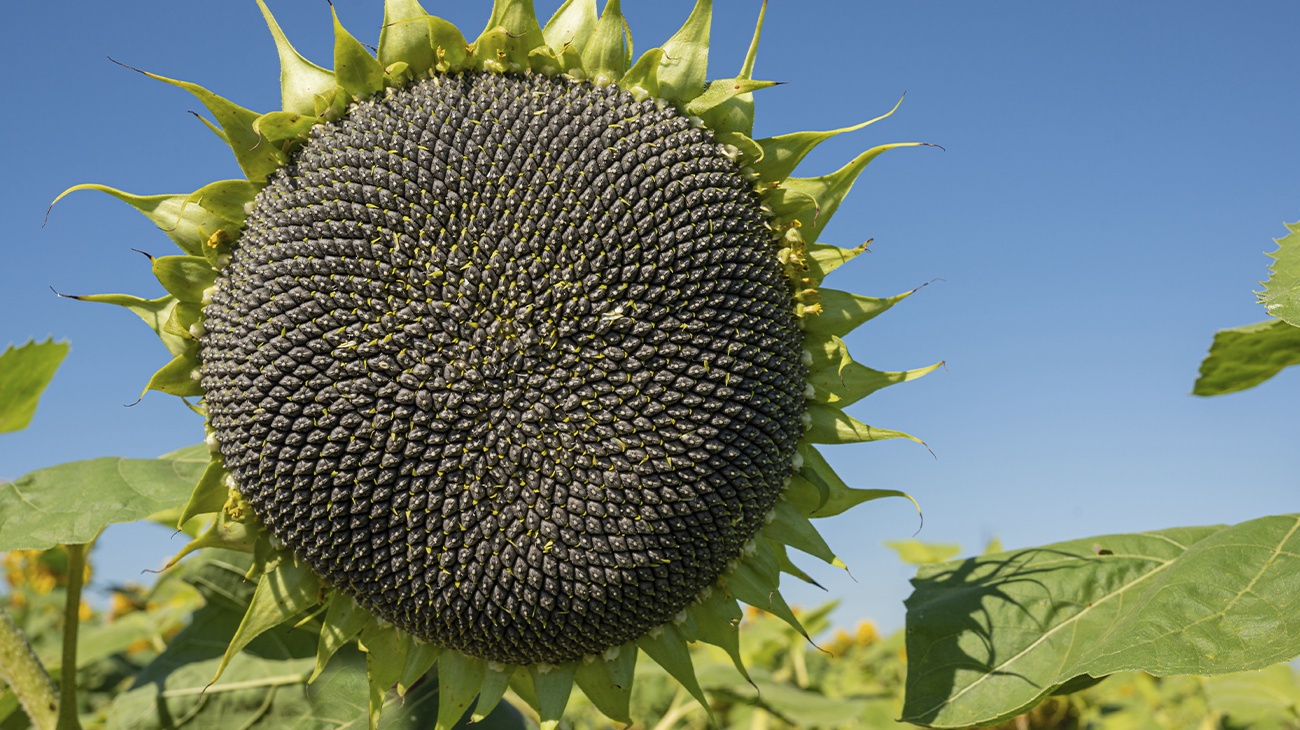
What is a sunflower hybridisation plot? It is an isolated seed field where maternal and paternal lines are grown to produce first-generation (F1) hybrid seeds. Seed production differs radically from the cultivation of commercial sunflowers, as its primary aim is to maintain 100 per cent genetic purity and ensure the expression of heterosis in future crops.
Below is a detailed analysis of the key stages of the technology, phytosanitary requirements and the reasons for the specific productivity of seed crops.
1. Why is spatial isolation critical for sunflowers?
Sunflower (Helianthus annuus) is a cross-pollinated crop, the pollen of which is carried over long distances by bees and other insects. The main threat to a seed field is biological contamination by foreign pollen from commercial crops or wild relatives.
Strict spatial isolation standards for Eurosem hybridisation fields:
Minimum distance: The hybridisation plot must be spatially isolated by at least 1,500–2,000 metres from any other commercial sunflower crops.
Voluntaries factor: The field must not border on plots where sunflowers were grown in the previous season. Voluntaries are an uncontrolled source of pollen and genetic drift.
Without maintaining an isolation radius of 1.5–2 km, it is impossible to obtain certified seed due to the risk of cross-pollination.
2. How genetic purity is ensured: stages of phytosanitary weeding in Eurosem hybridisation fields
To achieve maximum hybrid typicity, agronomists apply the method of negative selection — the removal of atypical or diseased plants. On hybridisation plots, at least three stages of varietal weeding are carried out:
Buds stage (star-shaped buds): Plants that deviate from the morphological characteristics of the line (in terms of height, leaf shape and colour, and growth rate) are removed.
During flowering, the parent plants are carefully inspected. If any plants appear that produce their own pollen, they are immediately removed by hand. This ensures that all the seeds obtained will be true hybrids.
Mass flowering and ripening: Final clearing of the field of late-developing, atypical plants.
If fertile plants are left in the maternal line, the farmer will end up with a mixed crop with low yield potential due to genetic drift. This stage is therefore crucial for growing EuroSem hybridisation fields.
3. Sowing plan and flowering synchronisation
The maternal (sterile) and paternal lines (fertility restorers) are sown separately in the field. The main technical challenge is to ensure synchronised flowering of both components. If the lines have different growing seasons, the sowing of the paternal line is delayed by a few days relative to the maternal line.
4. Why is the yield from hybridisation plots always lower than that of commercial sunflowers?
The lower yield of seed crops (often in the range of 0.8–1.5 t/ha) is an inherent consequence of the technology. It is determined by three factors:
Genetics of inbred lines: The paternal and maternal components are pure lines. They are physiologically weaker, have smaller flower heads and lower resistance to biotic and abiotic stresses. The strength of heterosis (hybrid vigour) is only evident in the F1 generation — that is, already in the commercial field of the seed buyer.
Loss of usable area: The parental rows are required solely for pollination. Once flowering is complete, they are either mown down completely or rolled flat to prevent their seeds from mixing with the hybrid seeds during harvest. This automatically reduces the harvestable area of the field by 20–35 per cent.
Strict culling: Regular weeding artificially reduces plant density to prioritise the quality of the seed.
FREQUENTLY ASKED QUESTIONS
What is the minimum spatial isolation required for sunflowers? The minimum distance for sunflower hybridisation plots is 1,500–2,000 metres from other sunflower crops.
What is negative selection in hybridisation plots? It is a process involving three rounds of phytosanitary and varietal weeding of the field, during which all atypical, diseased or fertile plants in the parental lines are removed by hand.
Why do seed sunflowers yield less? This is due to the genetic weakness of pure parental lines (the absence of heterosis at this stage), the mowing of parental rows after flowering (resulting in a loss of up to 35 per cent of the area), and the constant culling of plants during weeding.