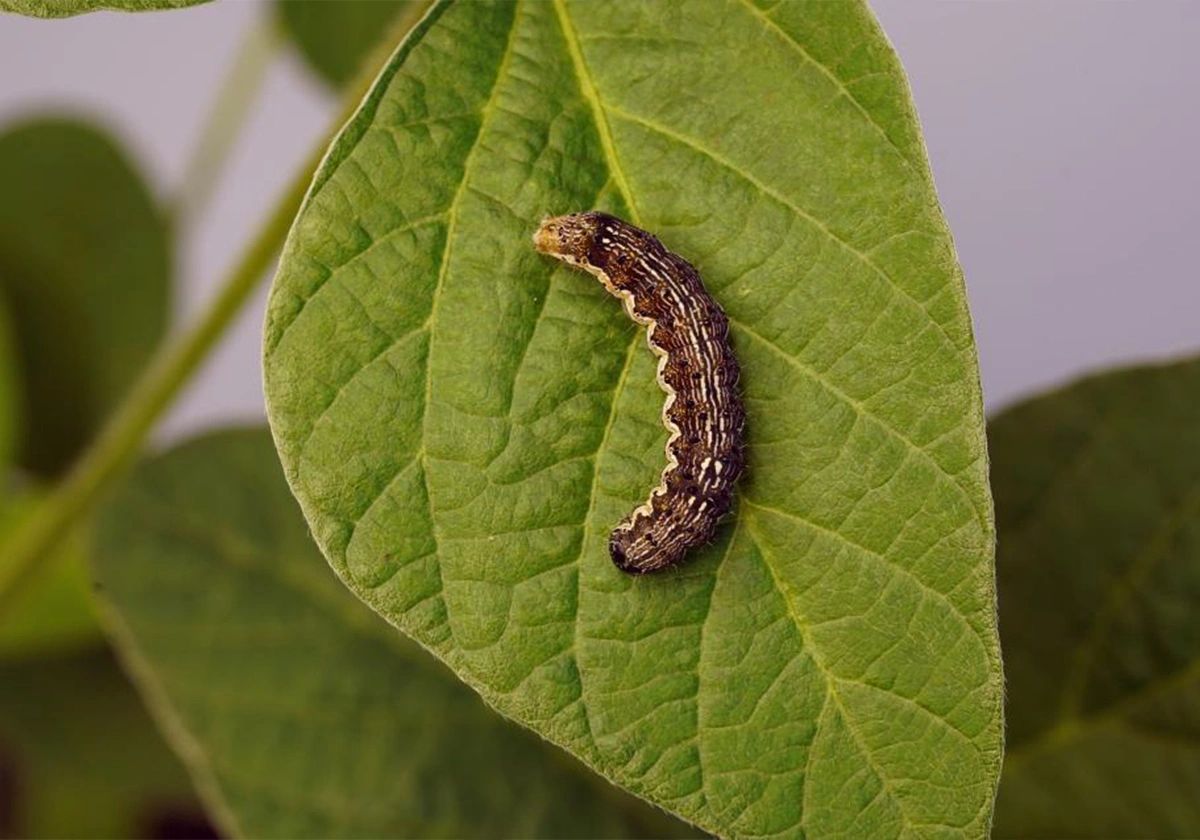
Global warming has significantly altered Ukraine’s phytosanitary map. Due to prolonged heatwaves and drought, the cotton bollworm (Helicoverpa armigera) has become one of the most dangerous polyphagous pests in the fields. This pest has explosive reproductive potential (a single female lays up to 3,000 eggs) and is capable of critically reducing crop yields in a matter of days.
Why is the cotton bollworm dangerous to sunflowers?
The greatest threat to sunflowers comes from the second- and third-generation caterpillars in July–August. Initially, they defoliate the leaves, but later penetrate directly into the plant’s flower head.
The caterpillars feed on the flowers and the bare young seeds. However, the main danger lies in the consequences: mechanical damage to the flower head opens the ‘gateway’ for pathogens. In the areas of the wounds, white rot, grey rot and dry rot develop instantly when exposed to moisture. As a result, the farmer loses not only the weight of the harvest but also its quality — the seeds lose their oil content, and the acid value rises rapidly.
Damage to other major crops
The cotton bollworm is a true polyphagous pest, damaging over 120 plant species.
Maize and soya
On maize, the pest damages the tassel and then burrows into the cob beneath the husk, destroying the grain during the milky ripeness stage. On soya crops, the caterpillars eat the buds and completely hollow out the pods from the inside.
Vegetables
The pest is a threat to tomatoes, aubergines and peppers. The caterpillars burrow into the fruit, rendering the produce completely unsuitable for sale.
How to protect crops: the top 3 rules
To minimise damage from the cotton bollworm, a clear course of action is required:
- Deep ploughing: destroys pupae overwintering in the soil.
- Pheromone traps: help to accurately detect the start of the moths’ flight.
- Timely insecticide treatment: spraying should be carried out during the period of mass hatching of caterpillars (younger instars), before they hide inside the flower heads or bolls. An effective combination of contact and systemic insecticides and ovicides.
The cotton bollworm does not tolerate delays. Only regular monitoring of fields and a swift response using modern insecticides will ensure the profitability of sunflower and other strategic crops.